
UP-NS: Where Things Stand
Railroad Weekly May 25, 2026
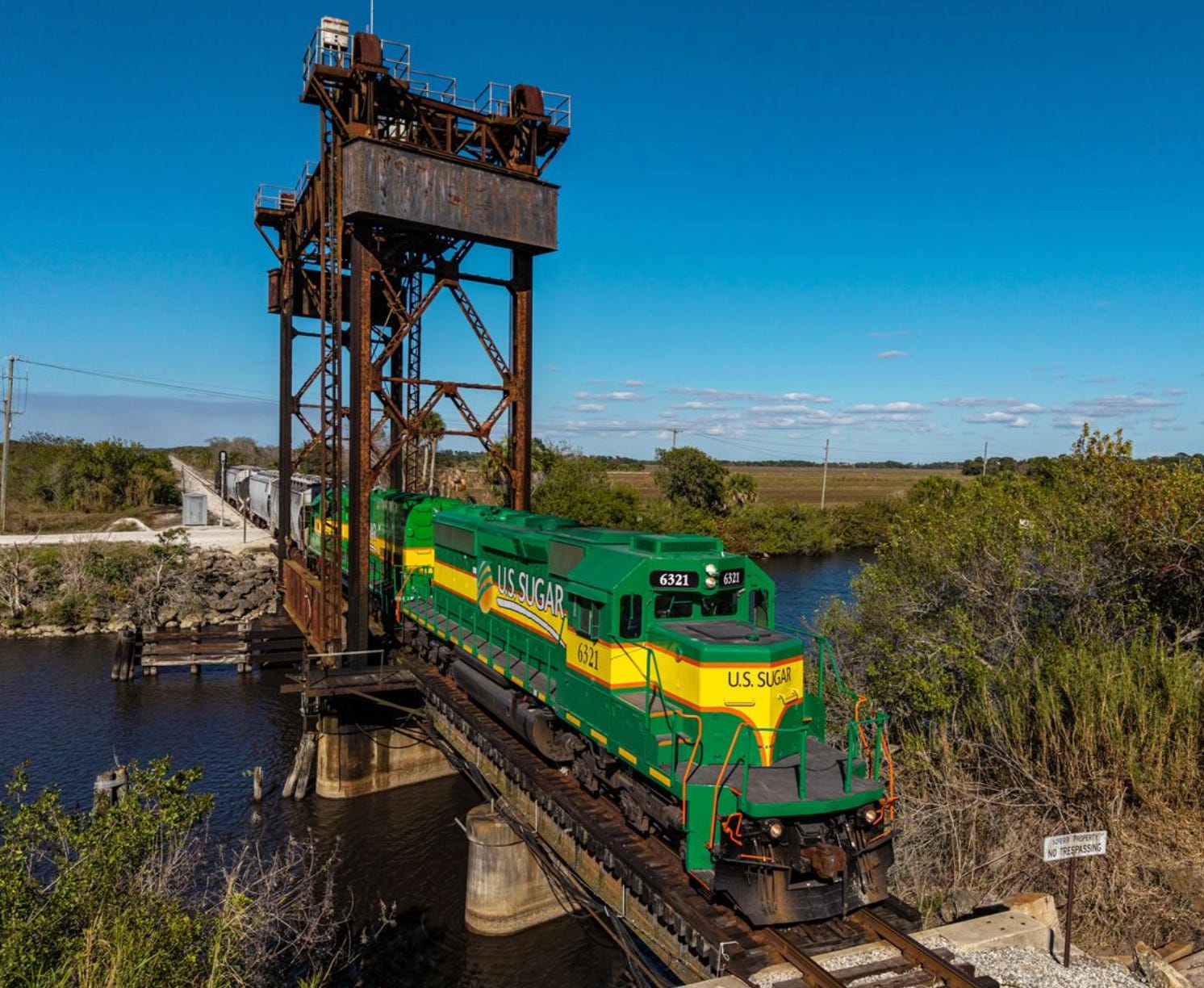
courtesy: Steel Wheels Photography

Inside This Issue
· Where Things Stand: What’s Next In the UP-NS Saga?
· 750m Ways to Leave Your Lover: Merger Could Die if Demands Too High
· Midwest Divest: UP Prepared to Surrender a Kansas City-St. Louis Line
· Nouveau Rich: Senate Confirms Richard Kloster for STB Seat
· Your Stance on “Enhance?”: Those w/ Different Leanings Have Different Meanings
· Secret Admirer: UP’s Vena Says CSX “Wanted to Merge With Us.”
· Propane on the Membrane: CN Super-Bullish on NGLs
· Autonomy Not My Enemy: J.B. Says Driverless Trucks Could Help IM Grow
· How High is Too High? At What Point Does Pricey Crude Cause a Recession?
Track Talk
“It truly is a game of lawyers now.”
-Union Pacific CEO Jim Vena, on the status of the UP-NS merger
The Latest
· Let’s start with a quick overview of where things stand with the $85b UP-NS merger. There’s no decision yet from the STB on whether to accept the revised merger application as complete. Expect a ruling this week (it must come no later than 30 days after the app’s April 30th filing). Assuming the Board says yes this time, it will then publish a schedule with deadlines for submitting comments and rebuttals on the merits of the merger. The Board will collect evidence, conduct an environmental study, presumably hold hearings, and ultimately decide to approve or reject within 90 days of ending its evidence collection. Once the schedule comes out, said Norfolk Southern’s chief Mark George, “We’ll get a sense of how long this is going to take to play out.” The two merging railroads hope to finalize everything by the first half of 2027.
· To be sure, proponents and opponents alike are already expressing their opinions. Besides UP and NS themselves, champions of the deal include several leading intermodal marketing companies like Hub Group and Werner, which love the prospect of darting their containers straight across the country without switching railroads mid-continent. They’re joined by hundreds of other individual rail shippers who’ve written letters of support. Several unions support the deal too, most importantly Smart-TD, which represents conductors. Many government officials and shortline railroads are onboard. Same for some major industry suppliers like the railcar builder Trinity.
· And the opponents? BNSF and CPKC love this deal like Superman loves kryptonite. Canadian National speaks loudly against the merger as well. CSX is quieter but active in the procedural shadows, filing multiple complaints, for example, about UP’s merger application. In the “hard no” camp are several industry associations, representing industries like chemical production and agriculture. BLET (locomotive engineers) and BMWED (maintenance workers) are two prominent unions against the merger. The no camp has its share of shippers and government officials as well. Others are staying neutral for now.
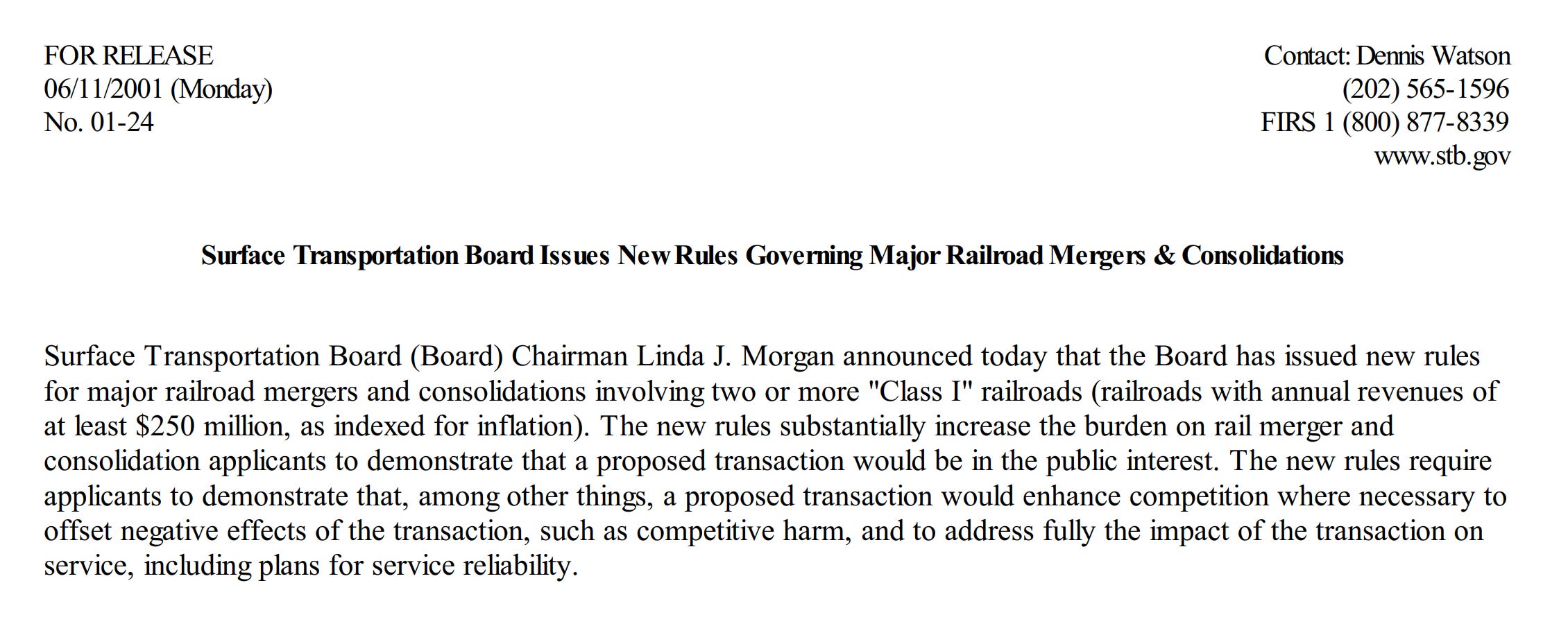
· Want to get rich? Have someone give you a nickel for every upcoming mention of the phrase “enhance competition.” That’s the standard large railroad mergers must meet for the STB to approve them. But what does that mean exactly? Does it mean just railroads competing with each other? Or does it also mean railroads competing with trucks? Stay tuned.
The 2001 merger rule, as announced at the time:
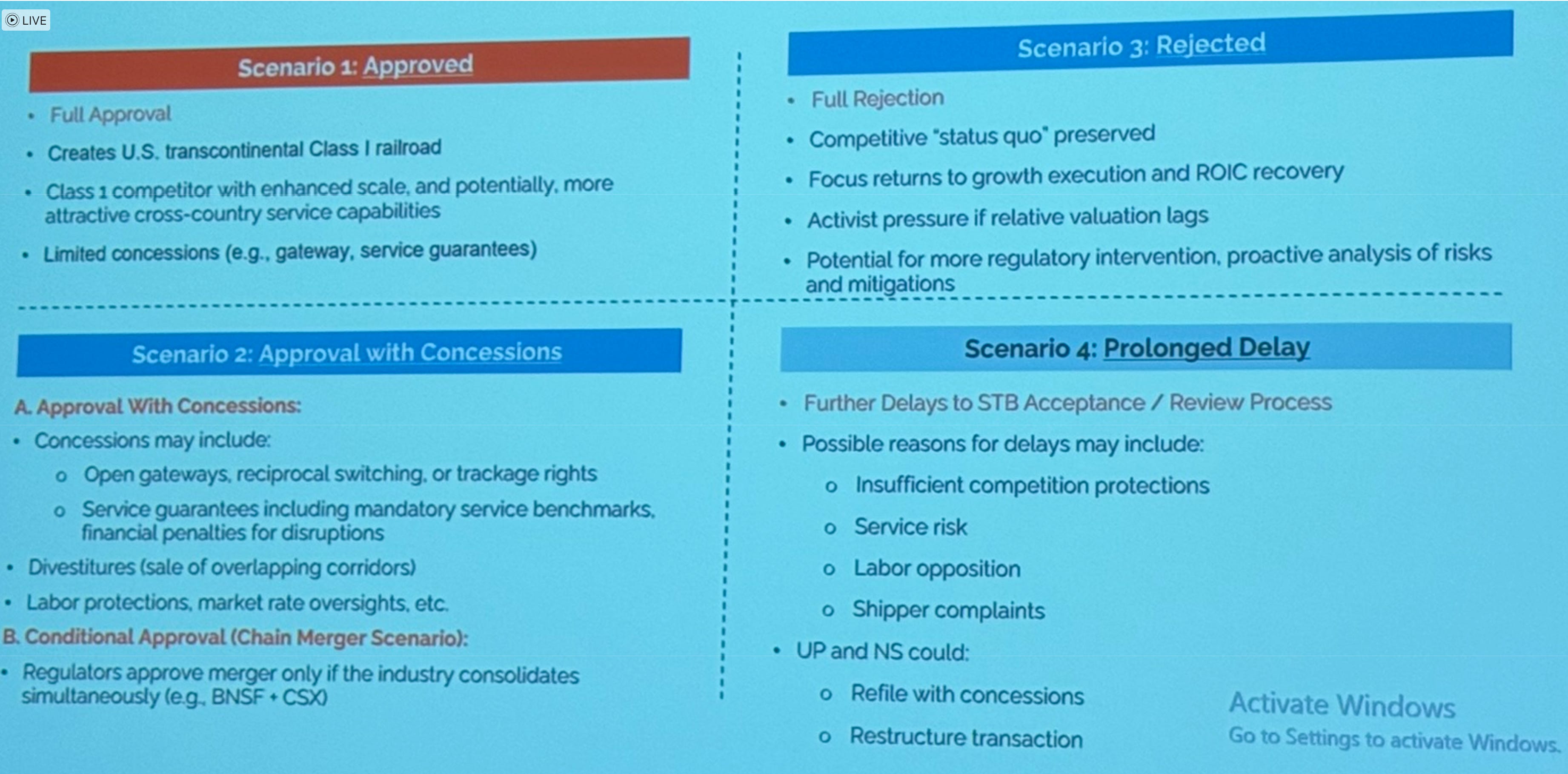
· Another giant looming question involves concessions. If the STB ultimately says yes to the deal, will it demand more than $750m worth? If the answer is yes, Union Pacific is contractually allowed to walk away from the deal. In the framing of analyst Tony Hatch, there are four possible decisions the STB could make: 1) Acceptance with just minimal concessions, 2) acceptance with significant concessions, 3) an outright rejection, or 4) no decision at all, just a prolonged delay. Below is from a presentation Hatch delivered at the “Rails to the Future” event hosted by Michigan State University earlier this month. Note the concessions he thinks could be possible, including a merger approval only if it’s joined by another merger, i.e. BNSF-CSX, to balance the competitive landscape.
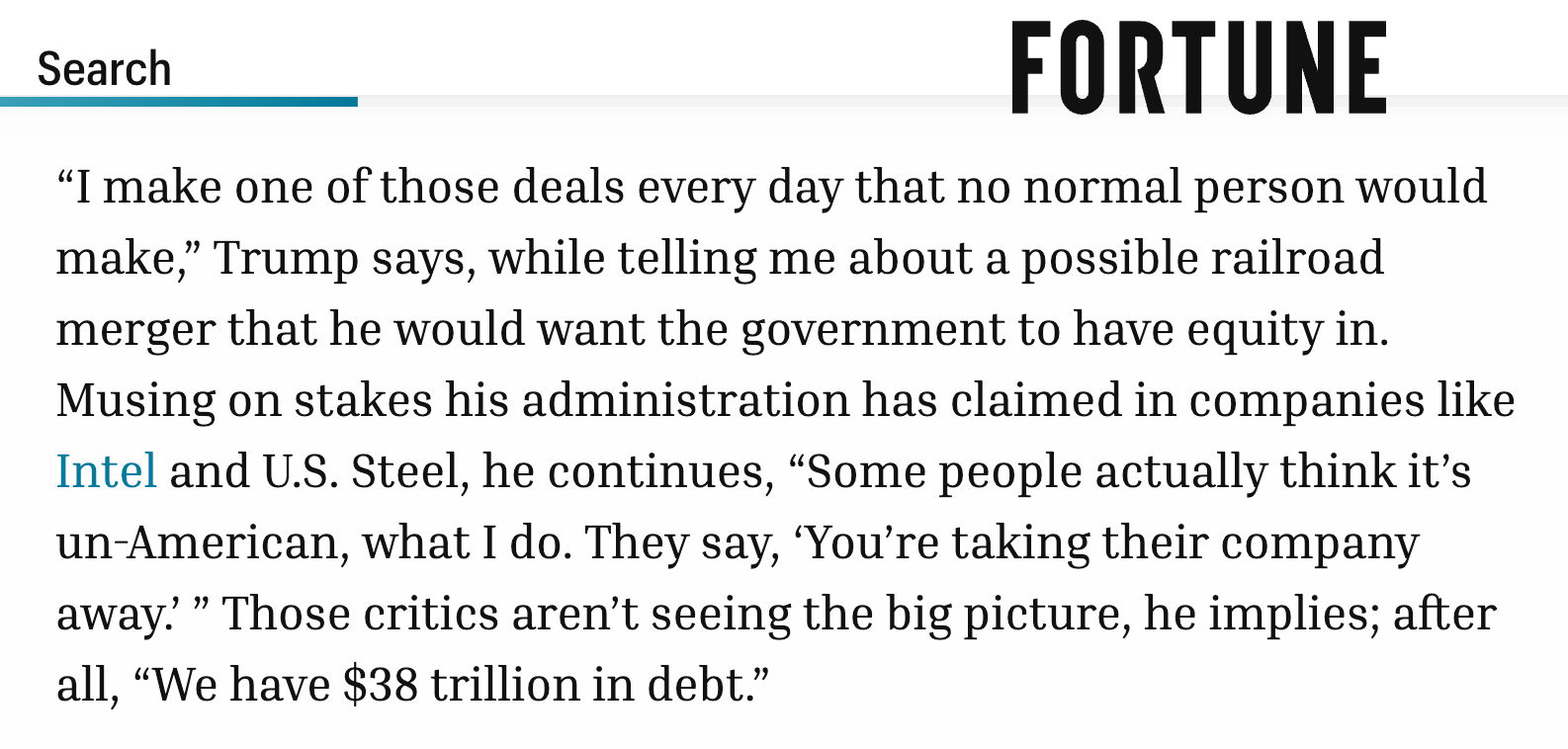
· Will we see any curveballs as the review process unfolds? One hint of potential surprises came last week when President Trump suggested Washington could take an ownership stake in a combined Union Pacific-Norfolk Southern. He raised the prospect in an interview with Fortune. Weeks earlier, the White House was actively engaged in negotiations to rescue and own Spirit Airlines, which eventually collapsed.
· In more prosaic news, the Senate confirmed Richard Kloster for an STB seat. It’s the seat vacated by former chair Marty Oberman when he retired—the term of the seat expires at the end of 2028. Sitting member Karen Hedlund, meanwhile, was renominated for a second term that would expire at the end of 2030. Kloster and Hedlund join Michelle Schultz and current chair Patrick Fuchs. A fifth seat (formerly held by Robert Primus) remains vacant.
Other Developments
· As discussed in recent issues of Railroad Weekly, several encouraging demand tailwinds are lifting rail freight volumes this spring. These include bountiful grain shipments, more favorable domestic intermodal conditions relative to trucking, a squeeze on global energy and chemical supplies supporting more North American production, growing demand for electricity, and booming construction of data centers and LNG export facilities—all combined with ongoing strength in consumer
Keep reading with a 7-day free trial
Subscribe to Railroad Weekly to keep reading this post and get 7 days of free access to the full post archives.