
SMX Flex
Railroad Weekly May 11, 2026

Inside This Issue
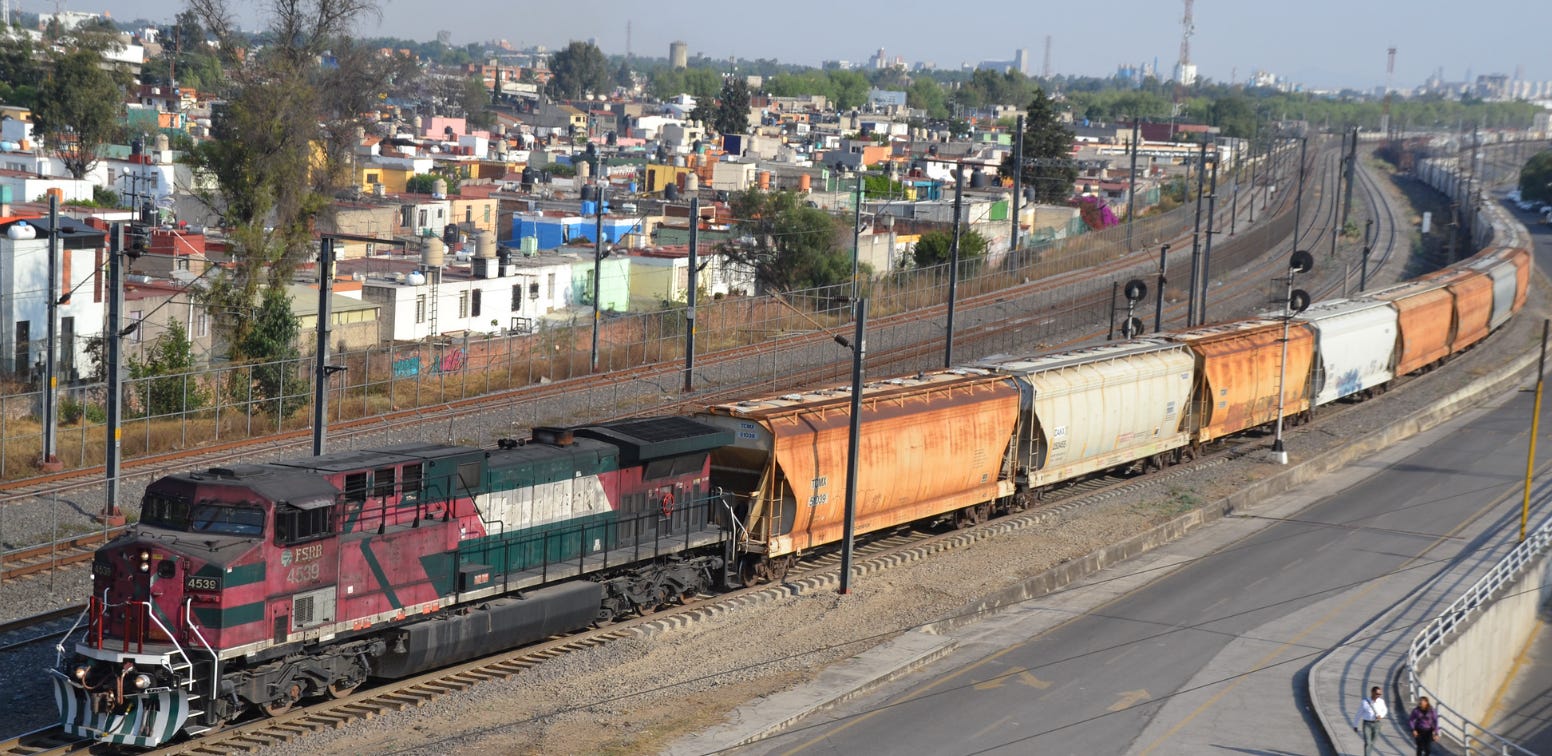
· SMX Flex: CSX, CPKC Upgrade Their Southeast-to-Mexico Service
· Ferromex Reflects: Mexico’s Leading RR Reports its Q1 Results
· Look What the Data is Showing: U.S. RRs are Solidly Growing
· Timber Tantrum: Only the Forestry Market is Shrinking; All Else Up
· More Grains on Trains: Of All That’s Up, Ag Growth Leads the Way
· Sufficient or Still Deficient? Does New UP App Meet STB Completeness Test?
· Loads Off the Roads: Schneider and Others Say IM Biz Winning Share
· Powder’s Dry, It’s Time to Buy: FTAI Eager to Acquire More Shortlines
· Powder Basin Exportation? UP Moving Wyoming Coal to Asia via Mexico
Publisher Notes:
· If you tried to email recently (at jay@railroadweekly.com) but received an error message, please re-send. My email was down for a period, but the problem is now resolved. You can also always call me at 732-372-9378.
· I will be at the Rails to the Future event in Michigan this week. If you’ll also be attending, please reach out. It’s always great to meet Railroad Weekly readers in person.
· Finally, just a friendly reminder that forwarding Railroad Weekly without a license is a violation of copyright law. In addition to single-user licenses, discounted multi-user and enterprise-wide licenses are available. Reach out for more details.
Track Talk
“This is not a merger born of weakness. Quite the opposite. Both companies are financially strong and operate largely complementary networks. The motivation isn’t survival. It’s serving our customers and the American economy better and unlocking growth.”
-Norfolk Southern strategy chief Mike McClellan
“The deal may be good for UP’s Wall Street investors, but it will lead to higher shipper prices, less competition, and service issues that the Board and stakeholders will need time to fully understand and explore.”
-BNSF statement to the STB
The Latest
· It’s week 11 of the Iran conflict, with energy and other economically critical commodities still trapped behind the obstructed Strait of Hormuz. Yet the U.S. economy seems thus far hardly affected. If anything, it’s improving, with solid job growth in April, strong corporate profits, another week of stock market gains, more positive vibes from purchasers in the manufacturing sector, and few if any signs of consumers closing their wallets, never mind sharply higher gasoline prices. In the background is mammoth capital spending on computing power (data centers) and the electrical power to keep the centers running. America is simultaneously building multi-billion-dollar infrastructure to export more natural gas. Add to this heavy government spending on infrastructure like highways. Don’t forget the semiconductor plant boom underway in metros like Phoenix. Make no mistake: Many American households and businesses are feeling uneasy amid the housing slump, tariff uncertainty, AI fears, geopolitical turbulence, inflationary pressures, and so on. But railroads? The tailwinds this year are palpable.
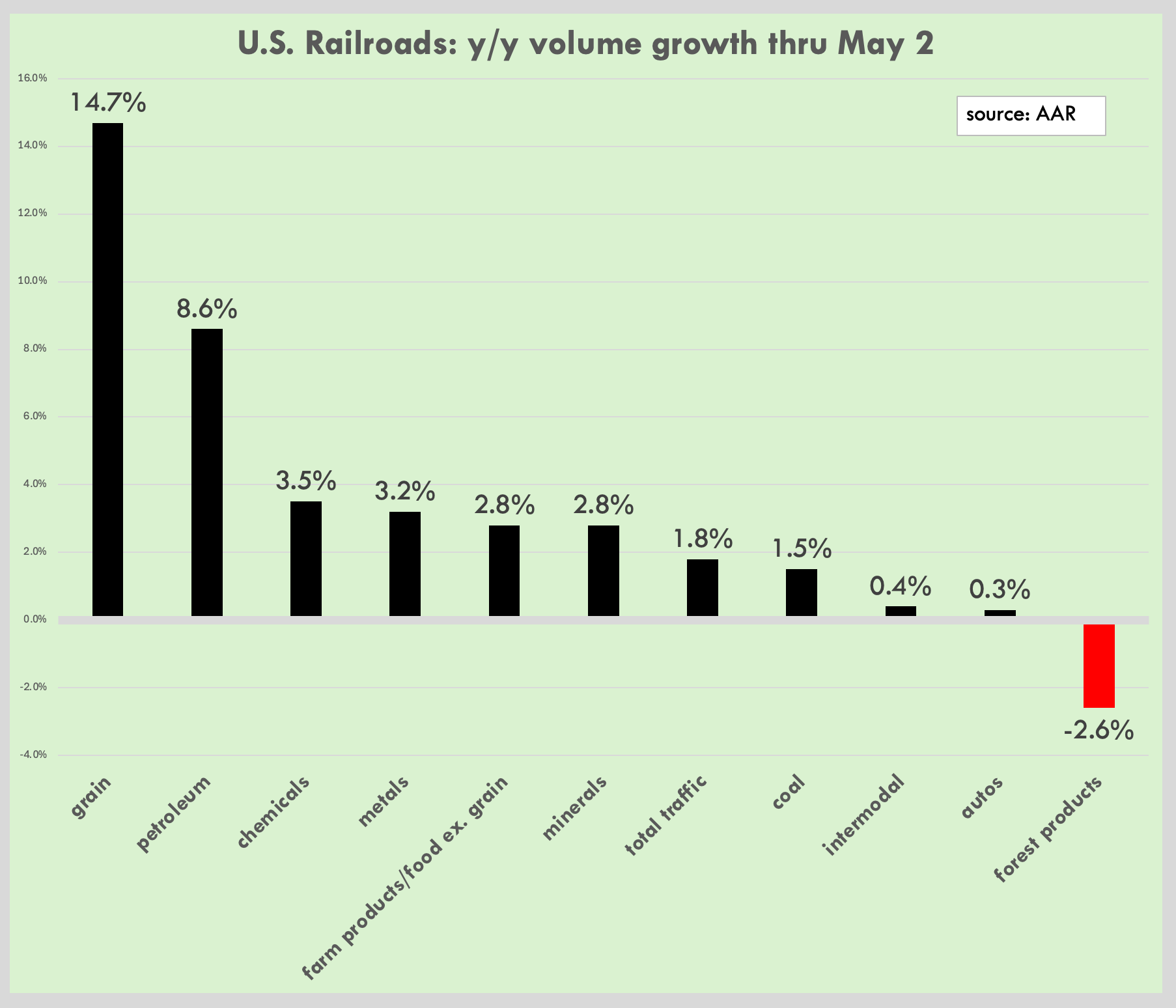
· Railroads, indeed, are feeling an updraft. According to the AAR’s latest U.S. traffic data (through May 2nd), all ten major freight categories—except for one—are growing this year.
· The exception is forestry products, due to the much-discussed housing weakness. But grain traffic is up 15% y/y thanks to bountiful harvests and robust exports. Petroleum and chemical shipments are up, with producers benefiting from the Iran conflict’s impact on global supplies. Declining natural gas prices are benefiting many
chemical and manufacturing firms. Cheaper natural gas doesn’t make coal miners happy, yet coal traffic is up too this year. Ditto for non-grain farm freight, along with shipments of metals, minerals, and even autos. Intermodal traffic is up slightly for the year. Sure enough, in their Q1 earnings calls, railroads talked about moving more construction material for all those data center, energy, highway, and semicon plant projects. They talked about the tailwinds from rising trucking rates too, and from rail’s unbeatable fuel efficiency. Give the railroads credit for self-help too, with new partnerships, technologies, real estate development, service improvements, etc., all playing a role in the 2026 rail freight upturn.
· The AAR’s latest Rail Industry Overview (RIO) notes that U.S. carload traffic in April reached its highest level since 2019. Intermodal traffic had a strong April too, one of its strongest ever in fact. This, the AAR remarked, shows “continued resilience in containerized trade and consumer-related freight demand.” For more insight on what’s happening in the container space, listen to this discussion with L.A.’s port director Gene Seroka.
Keep reading with a 7-day free trial
Subscribe to Railroad Weekly to keep reading this post and get 7 days of free access to the full post archives.